Some children find words late. That does not mean they are not telling us anything. After a car accident, a fire, a violent outburst at home, or a sudden loss, many kids communicate distress with the tools they know best: play, movement, drawings, small rituals that feel safe. I have watched a five-year-old place toy firefighters in the same neat row for six weeks straight, a ten-year-old build a Lego bridge and crash it on purpose, a teen trace a looping path on the carpet while eyes tracked my fingers. None of that was random. It was language, and it was therapy’s doorway.
This is the heart of child therapy for trauma. We join a child inside their natural mediums, help the nervous system find steadiness, and slowly reintroduce meaning where chaos took over. Play is not a distraction from trauma therapy. Play is the work.
What trauma does to a child’s body and story
Trauma is not defined by the size of the event. It is defined by overwhelm without enough support. A child who witnesses a parent’s panic attack in a grocery aisle can carry that jolt for years if no one helps them make sense of it. Another child, rescued from a house fire, might sleep soundly once they can feel a parent’s calm breathing and hear the story told with coherence and hope.
When a child is flooded, the brain prioritizes survival. You see it in fast breathing, jumpiness, stomachaches, sleep disruption, and sudden irritability. You also see it in behavior that looks oppositional but is functionally protective, like refusing to go to school after a bus fight or exploding when a sibling borrows a hoodie. Executive functions - planning, remembering multi-step directions, tolerating frustration - go offline more easily. The child is not broken. The alarm system just learned to fire early to keep them safe.
Memory shifts, too. Traumatic memories tend to be sensory and fragmented. A smell triggers a meltdown. A siren freezes a child mid-step. The conscious mind may not hold a clear narrative, which is why asking a seven-year-old to “explain what happened” often yields silence or a scrambled tale. We earn the narrative by first restoring regulation and safety.
Why play is the treatment, not the reward
Adults talk to think. Kids play to think. In the therapy room, play creates distance and control. A puppet can ask the risky question. A doll can leave the room. A block tower can fall and be rebuilt ten times in forty minutes. Through those choices, the child rehearses mastery and builds the capacity to stay present alongside discomfort.
I once worked with a second grader who had been in a rollover crash. In free play, he repeatedly picked the ambulance, loaded it with Lego people, and drove it to a pretend hospital whose doors kept jamming. His worry was not about blood or death. It was about stuckness. We practiced opening the doors with different tools, then imagined calling extra staff, then created a backup entrance. By week eight, he started letting the ambulance arrive at a hospital that opened easily. Shortly after, his morning transitions to school improved and he stopped scanning for exit paths in hallways. He had reclaimed mobility in his inner map.
Play taps into motor pathways, sensory input, and imagination, which is exactly where trauma lives. For neurodivergent kids, whose nervous systems can be sensitive to noise, touch, or unpredictability, play can be adapted to include predictable routines, special interests, and sensory supports that reduce overwhelm. That flexibility is not an add-on. It is therapy.
How therapy begins: safety before story
The first sessions rarely mention the worst moment. We start with safety building. That might mean walking the office together to learn where the bathroom is, agreeing on a stop signal, and letting the child choose between beanbags and a chair. Choice is medicine. Predictability lowers the body’s guard.
Parents and caregivers carry a large share of the work in child therapy. In intake, I gather a timeline, ask about strengths, and map current stresses like custody transitions, school avoidance, or a parent’s work schedule. With consent, I often speak with teachers or pediatricians to align supports. Then I create a plan that blends regulation, attachment, and, when appropriate, direct trauma processing.

When trauma strains the parental relationship, I sometimes refer caregivers to couples therapy focused on communication and co-regulation. If two adults in a home argue constantly about how to respond to meltdowns, a child absorbs that tension. Aligning caregivers does not require perfection. It requires enough predictability that the child knows which adult will take the lead when panic hits.
Core modalities that help children heal
No single technique fits every child. The work is integrative and paced by the client’s nervous system. Several modalities often move in and out of a single course of treatment.
- Play therapy. Child-led play allows themes, fears, and strengths to surface naturally. The therapist mirrors, sets gentle limits, and invites mastery. Play can be symbolic, sensory, or structured with games that practice frustration tolerance and flexibility. I often include cooperative board games to practice losing and recovering, then highlight the recovery in real time. Trauma-focused cognitive behavioral therapy. TF-CBT introduces coping skills, builds a trauma narrative, and involves caregivers. With younger children, “thoughts” become cartoons and “coping plans” turn into superhero toolkits. The trauma narrative is paced and titrated so the child never drowns in the memory. EMDR therapy adapted for kids. Eye Movement Desensitization and Reprocessing helps the brain integrate stuck memories using bilateral stimulation like taps, tones, or eye movements. With children, I use short sets, playful targets, and drawings to contain material. A child might draw the scary scene as a comic strip, then we process frame by frame. EMDR can be powerful for single-incident trauma like car accidents or medical procedures, and it can be integrated carefully for chronic trauma with an emphasis on resourcing. Attachment based work. When the injury involves rupture with a caregiver, we rebuild through attuned interactions. Therapists coach parents live through play, repair attempts, and routines that signal safety, like predictable goodbyes or collaborative problem solving after a conflict. The therapist may use reflective questions to help parents notice the child’s underlying need beneath behavior. Somatic and sensory regulation. Breath work, movement, rhythm, and sensory diets help the body tolerate activation. I keep a small basket of tools - a weighted lap pad, noise-reducing headphones, chewable jewelry, textured cards - and invite the child to become the scientist of their own nervous system. We track what calms, what sharpens focus, and what signals “too much.”
These are not separate boxes. In a single session I might use a breathing game, a ten minute EMDR set around a squealing brake sound, then a parent-child repair practice when a sibling barges in and triggers defensiveness. The order follows the body’s cues.
Involving caregivers without taking the pen away
Parents are not to blame for trauma, even when they wish they could have prevented it. They are essential partners in recovery. I meet with caregivers regularly to share themes, practice co-regulation, and align limits. It helps to frame behavior through a survival lens. A child who hoards granola bars after a custody change is communicating scarcity, not greed. That reframing keeps discipline calm and targeted.
Here is a simple, practice-based list I give families preparing for the first month of trauma therapy:
- Create two or three consistent calming routines at home - the same short song at bedtime, a morning check-in while packing lunch, a five-minute after-school snack ritual. Reduce avoidable surprises for a few weeks - preview plan changes the night before and again at breakfast. Use a shared phrase to pause conflicts - something like “yellow light,” then step back for two minutes before problem-solving. Track one or two signals of stress and recovery - for instance, time to fall asleep and number of school nurse visits, so progress becomes visible. Communicate with the therapist about big schedule shifts or new stressors, even if they seem minor.
Those small moves amplify therapy’s impact. They also show the child that change is a family project, not a personal burden.
Working with neurodivergent kids after trauma
Trauma therapy does not cancel out neurodivergent therapy. The two inform each other. Autistic and ADHD youth, as well as children with language processing differences, often experience the world with heightened sensory input and demand uncertainty. That can make trauma effects more intense, and it also offers remarkable strengths, like pattern detection, honesty about distress, and deep focus on interests.
Adjustments I build into sessions include clear visual schedules, more time for transitions, options for movement during talk, and the use of intense interests to scaffold exposure. If a child loves trains, we may map their coping plan as a rail network and practice “switching tracks” when overwhelmed. For an ADHD preteen, trauma processing might be broken into five minute segments separated by physical games that discharge energy. I avoid idioms and keep metaphors concrete. Parents often appreciate coaching on school accommodations that match the therapy goals, such as access to a quiet space or a predictable lunch buddy.
It is easy to misread autistic shutdown or ADHD restlessness as defiance when it may be a stress response. The question I keep in mind is simple: what would make this ten percent easier for the child right now without removing the chance to practice a skill? That is the sweet spot where growth lives.
A closer look at EMDR with children
EMDR therapy has a strong evidence base for single-incident traumas and is increasingly used, with care, for complex trauma in kids. The core idea is that the brain has a natural capacity to integrate disturbing experiences, but sometimes material becomes stuck. Bilateral stimulation seems to help the system refile that memory where it belongs.
For a nine-year-old who developed panic in https://www.fuzzysockstherapy.com/privacy-policy cars after a fender bender, we might begin with resource installation. We draw a safe place and practice eye movements while picturing it. We also create a team of helpers - real or imagined - that the child can call on during sets. Then we identify targets. A common early target is the sound of screeching brakes. Using very short sets of eye movements and lots of check-ins, we process the image and body sensations. Kids often report a shift, like “the noise is farther away now” or “my chest is not as tight.” We interleave this with playful breaks so the session ends on a note of competence.
Not every child is a fit for EMDR at the outset. If dissociation is frequent or home stability is low, I hold off and focus on safety, attachment, and skills. The therapist’s job is to choose timing and dose, not just technique.
The role of schools, pediatricians, and community
Children spend most waking hours outside therapy. When possible, I collaborate with school counselors, teachers, and primary care clinicians. A child who jumps at fire drills needs a heads-up before the test alarm, not a lecture about bravery. I have seen attendance rebound when a principal agreed to a gentle reentry plan after bullying, and panic symptoms ease when a pediatrician ruled out anemia that was amplifying fatigue and irritability. Community matters. If a family attends a faith or cultural community, the rituals and social supports there can become anchors for recovery.
For families navigating high-conflict divorce or involvement with child protective services, therapy must account for legal constraints and the child’s need not to be triangulated. I document carefully, maintain clear boundaries, and keep the therapy goals child centered. The most healing move for adults in conflict is to reduce pressure on the child to choose sides.
What progress looks like, and how long it takes
I tell families to expect gradual shifts, not a single turning point. Early signs include better sleep onset, fewer outbursts per week, and increased flexibility around small changes. Over time, children can tolerate reminders of the trauma without the body flooding. They begin to tell a more coherent story, often in bits that appear during play, drawing, or casual conversation in the car.
Duration varies. For a straightforward medical trauma with a supportive family, six to twelve sessions can bring significant relief. For complex trauma, therapy might span many months, sometimes with periods of maintenance and check-ins. I schedule reassessments every six to eight weeks, use simple measures like the child-rated SUDs scale for distress during triggers, and adjust the plan based on data and clinical feel.
The most satisfying marker is not the absence of distress. It is the return of curiosity. When a child starts to explore again - new foods, new games, new friendships - you know the nervous system is trusting the world a little more.
When play is not enough: medication, safety plans, and higher levels of care
There are times when outpatient therapy and home supports do not cover the risk. If a child has persistent suicidal ideation with intent, escalating self-harm, or is losing weight rapidly due to trauma-induced avoidance of eating, I collaborate with the pediatrician or psychiatrist to consider medication and higher levels of care. SSRIs can reduce anxiety and allow therapy to proceed, particularly for older children and teens. Medication is not a cure for trauma. It is a bridge that can stabilize symptoms so the child can do the work.
Safety plans are concrete and brief. I write them with the child in language they understand, with steps like: notice the signal, use two specific coping actions, contact a named adult, and remove access to dangerous items. Families deserve to know when to go to urgent care, when to call mobile crisis, and when to wait it out at home with support.
Myths that stall healing
A few beliefs tend to get in the way. The first is that talking about the trauma will make it worse. Dumping the story on a child can indeed overwhelm, but titrated processing inside a secure relationship tends to reduce symptoms, not amplify them. The second is that good behavior means the trauma is gone. Many children go quiet and compliant when they are scared. They need permission to have feelings without losing connection. A third myth is that kids forget. The body does not forget easily. It does rewire with the right conditions.
What play looks like in practice
Parents often ask what actually happens in a fifty minute session. It can look deceptively simple. A boy who lost a grandparent pours kinetic sand into a miniature urn, then dumps it into a garden scene while narrating how the “sun takes the heavy stuff up.” I might mirror the rhythm, add a tiny bench, and say something like, “People come here when they miss her. The sun helps.” If he pauses and looks at me, I hold his gaze a few seconds longer and breathe slowly. That is attachment work, somatic co-regulation, and grief integration, all wrapped in sand and silence.
A teen who was bullied online chooses to write the insults on sticky notes and place them on a foam shield. We test how many notes the shield holds before it sags. We talk about what the shield is made of - friends, hobbies, a favorite teacher - and whether any notes need to go to adults. Then we do a short EMDR set on the moment the rumor spread. By the end, she feels “more annoyed than terrified.” Annoyed is progress.
Comparing common paths of care
Parents often want to understand how different approaches fit together. Here is a compact map that I share, keeping in mind that many kids use more than one path over time:
- Child-led play therapy focuses on symbolic expression and mastery. Best for younger children and those who struggle to verbalize. TF-CBT blends skills, narrative work, and caregiver involvement. Strong for school-age kids and teens who can reflect on thoughts and feelings. EMDR therapy targets sticky, sensory memories with bilateral stimulation. Useful for single-incident trauma and selected complex cases with strong preparation. Attachment based therapy emphasizes caregiver-child interaction and repair. Essential when relationship rupture is central to the trauma. Somatic and sensory regulation adds body-based tools that support all the above. Crucial for kids with high physiological arousal or neurodivergent sensory profiles.
This is not a hierarchy. It is a toolkit that we tailor.
When caregivers need their own support
Parents arrive with their own histories. A mother with unresolved medical trauma might tense visibly during her child’s asthma treatment. A father who grew up with a volatile parent may feel overwhelmed by his daughter’s panic attacks and default to withdrawal. Individual therapy for caregivers can lower the household’s overall arousal and improve follow-through on the child’s plan. When tension between adults is high, couples therapy can be a wise investment. It is not about blame. It is about building a co-parenting climate where the child senses consistency.
Cultural humility and the meanings of play
Trauma does not land in a cultural vacuum. Rituals around grief, beliefs about authority, and expectations for emotional expression shape how children and families engage therapy. I ask about what comfort looks like at home, who is considered family, and which stories elders tell when bad things happen. Then I fold those into treatment. Maybe the calming routine is a nightly prayer. Maybe the trauma narrative becomes a folktale template. Respecting these frames is practical. It increases buy-in and reduces the risk of inadvertently shaming the child’s coping.
Teletherapy and the portable playroom
Not every family can attend in person. Teletherapy for kids can work when you prepare. I ask families to gather a small “therapy basket” at home - paper, crayons, a favorite stuffed animal, a deck of cards, and any sensory tool the child likes. We use the house itself for exposures and regulation drills. A child afraid of the basement after a flood might walk there with a parent while I coach on breathing and pacing. Some EMDR work adapts to telehealth using on-screen bilateral tools or parent-administered taps with guidance. Privacy and safety checks are crucial, and I keep sessions shorter with more movement breaks.
The long arc: resilience as a lived practice
Resilience is not a trait a child either has or lacks. It is a set of experiences that teach the nervous system it can handle intensity and return to baseline. Play is how those experiences become embodied. Over months, the child learns that feelings have edges, that adults show up predictably, that scary reminders can be navigated, and that joy can coexist with grief. These are not abstract lessons. They are moments: a parent kneeling to make eye contact in the kitchen, a sibling waiting their turn on a swing without snatching, a quiet car ride after soccer where nobody brings up the accident.
When I think back on cases that went well, I do not picture symptom checklists. I see the day a child offered the firefighter figure to me, not just to himself. I hear a parent saying, “We used our yellow light and came back to the problem after dinner.” I notice a school report that says “participated, even during the lockdown drill,” and I know the work took root where it matters, in the life outside the office.
Child therapy for trauma is disciplined, gentle, and creative. It borrows from neuroscience without losing sight of toys on the floor. It respects that healing is relational. And at its best, it uses play to give a child back not just calm, but the freedom to grow again.
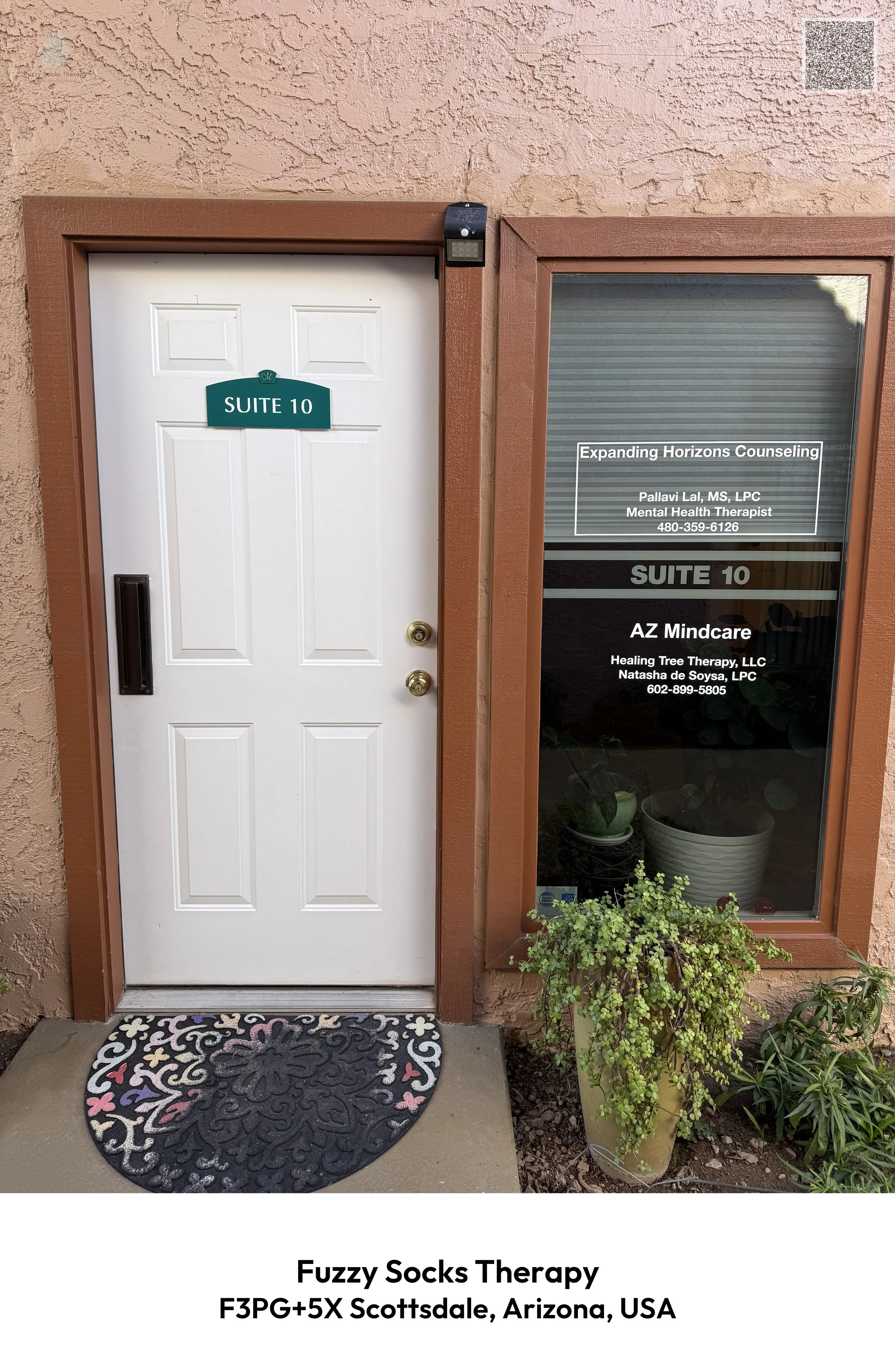
Address: 3295 N. Drinkwater Blvd., Suite 10, Scottsdale, AZ 85251
Phone: (720) 378-8454
Website: https://www.fuzzysockstherapy.com/
Email: [email protected]
Hours:
Monday: 9:00 AM - 5:00 PM
Tuesday: 9:00 AM - 5:00 PM
Wednesday: 9:00 AM - 5:00 PM
Thursday: 9:00 AM - 5:00 PM
Friday: 9:00 AM - 5:00 PM
Saturday: Closed
Sunday: Closed
Open-location code (plus code): F3PG+5X Scottsdale, Arizona, USA
Map/listing URL: https://maps.app.goo.gl/cqhwvXU4UMg6QL1YA
Embed iframe:
The practice offers in-person therapy in Scottsdale along with online sessions for clients in Arizona, Colorado, and Florida.
Clients can explore services such as trauma therapy, EMDR therapy, Deep Brain Reorienting Therapy, neurodivergent therapy, child therapy, couples therapy, discernment counseling, and parenting intensives.
Fuzzy Socks Therapy is especially relevant for people navigating trauma, dysfunctional family dynamics, ADHD, autism, relationship conflict, and emotional overwhelm.
The website presents a direct, practical therapy style focused on real tools and meaningful change rather than vague advice.
Scottsdale clients looking for trauma-informed psychotherapy can find support that combines deeper healing work with concrete skill building.
The practice also offers help for adult children of dysfunctional families, couples on the brink, and neurodivergent kids, teens, and adults.
To get started, call (720) 378-8454 or visit https://www.fuzzysockstherapy.com/ to book a free consultation.
A public Google Maps listing is also available for Scottsdale location reference alongside the official website.
Popular Questions About Fuzzy Socks Therapy
What does Fuzzy Socks Therapy help with?
Fuzzy Socks Therapy helps with trauma, dysfunctional family patterns, neurodivergence, relationship conflict, emotional overwhelm, and related challenges for individuals, couples, and families.
Is Fuzzy Socks Therapy located in Scottsdale, AZ?
Yes. The official website lists the office at 3295 N. Drinkwater Blvd., Suite 10, Scottsdale, AZ 85251.
Does Fuzzy Socks Therapy offer in-person and online sessions?
Yes. The official site says the practice offers in-person therapy in Scottsdale and online therapy in Arizona, Colorado, and Florida.
What therapy approaches are listed on the website?
The website highlights EMDR therapy, Deep Brain Reorienting Therapy, discernment counseling, play therapy, Dialectical Behavior Therapy, Emotionally Focused Therapy, and practical trauma-informed skill building.
Who provides therapy at Fuzzy Socks Therapy?
The official website identifies the therapist as Lianna Purjes.
Does the practice offer couples counseling?
Yes. The website includes couples therapy, couples intensives, and discernment counseling for couples deciding whether to stay together or separate.
Does the practice work with children and adolescents?
Yes. The site says the practice offers child therapy and support for children, adolescents, and their families.
How can I contact Fuzzy Socks Therapy?
Phone: (720) 378-8454
Email: [email protected]
Website: https://www.fuzzysockstherapy.com/
Landmarks Near Scottsdale, AZ
Drinkwater Boulevard is the clearest local reference point for this office and helps nearby clients place the practice in Scottsdale. Visit https://www.fuzzysockstherapy.com/ for service details.
Old Town Scottsdale is a familiar city landmark and a practical reference for people searching for therapy near central Scottsdale. Call (720) 378-8454 to learn more.
Scottsdale Civic Center is another recognizable local landmark that helps define the surrounding area for nearby professional services. The official website has current contact details.
Scottsdale Stadium is a well-known destination in the city and a useful point of reference for local users. Fuzzy Socks Therapy offers both in-person and online sessions.
Indian School Road is a major corridor that helps many residents orient themselves in Scottsdale. More information is available at https://www.fuzzysockstherapy.com/.
Fashion Square and the surrounding central Scottsdale area are widely recognized by local residents and visitors alike. Reach out through the website to book a free consultation.
Downtown Scottsdale is a strong local search reference for people seeking counseling and psychotherapy services in the area. The practice serves Scottsdale in person and multiple states online.
Scottsdale Road is another major route that helps define the broader service area for clients traveling from nearby neighborhoods. The practice supports individuals, couples, and families.
The Scottsdale arts and civic district is a useful area reference for those familiar with the city center. Visit the site to review specialties and next steps.
Central Scottsdale commuter corridors make this practice relevant for nearby residents who want in-person therapy, while online sessions add flexibility for clients in Arizona, Colorado, and Florida.